Case Study · Games24x7 · 2022
Rummy & Fantasy
A chatbot redesign to transform customer support for Rummy and Fantasy products at Games24x7 — moving from fully human-routed tickets to an intelligent self-service system built on Haptik's conversational AI platform, targeting 75% query resolution without human agent intervention.
The Problem
Customer support can be self-service, especially for the large number of repetitive / redundant queries we get from our customers and we don't have any chat support in our system. For each query we transfer to a human service agent from our CS team.
We want to make customer support more transparent, quicker and easier for end users. Additionally, there are a bunch of experience issues as well listed below.
What We Know
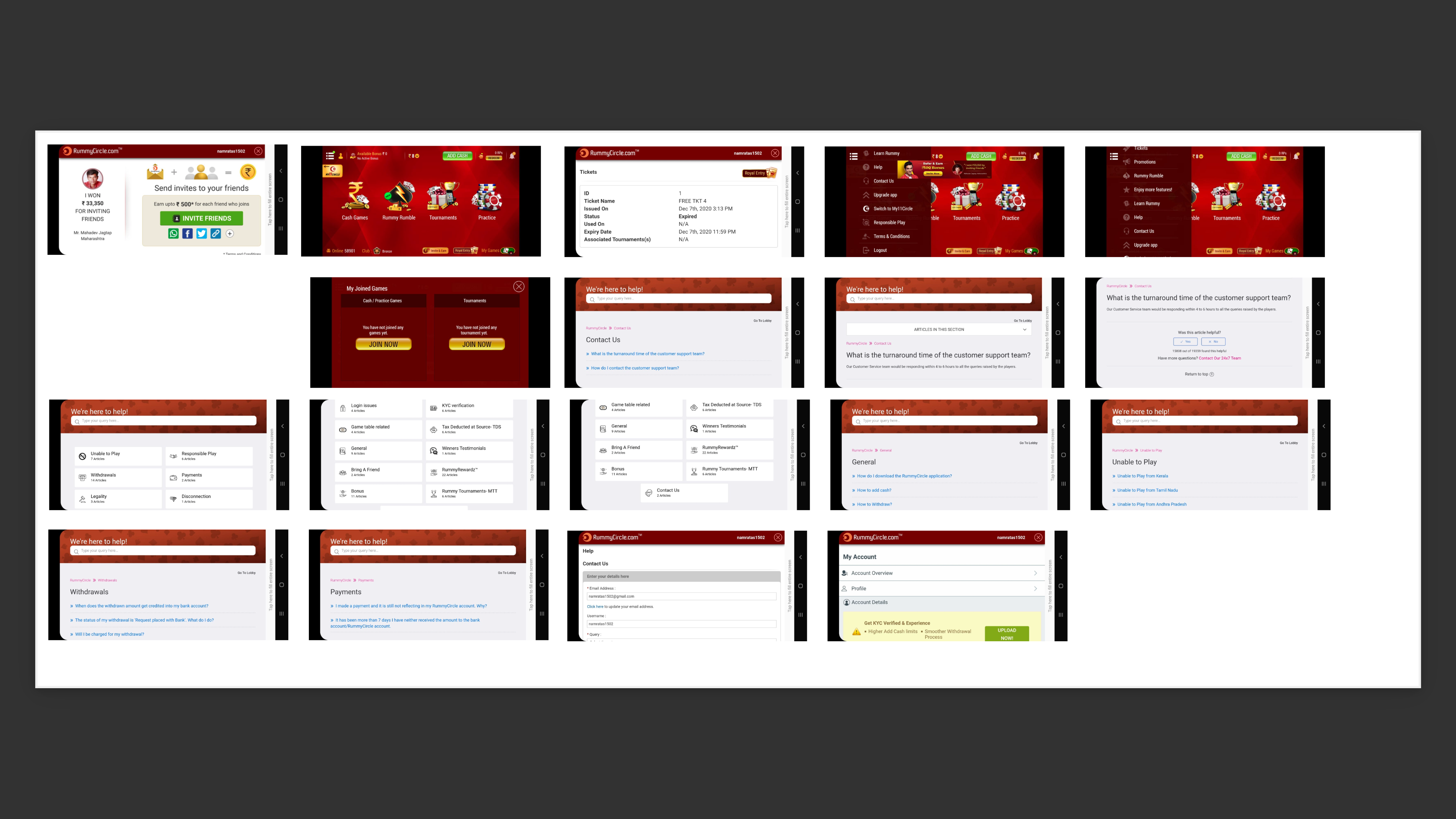
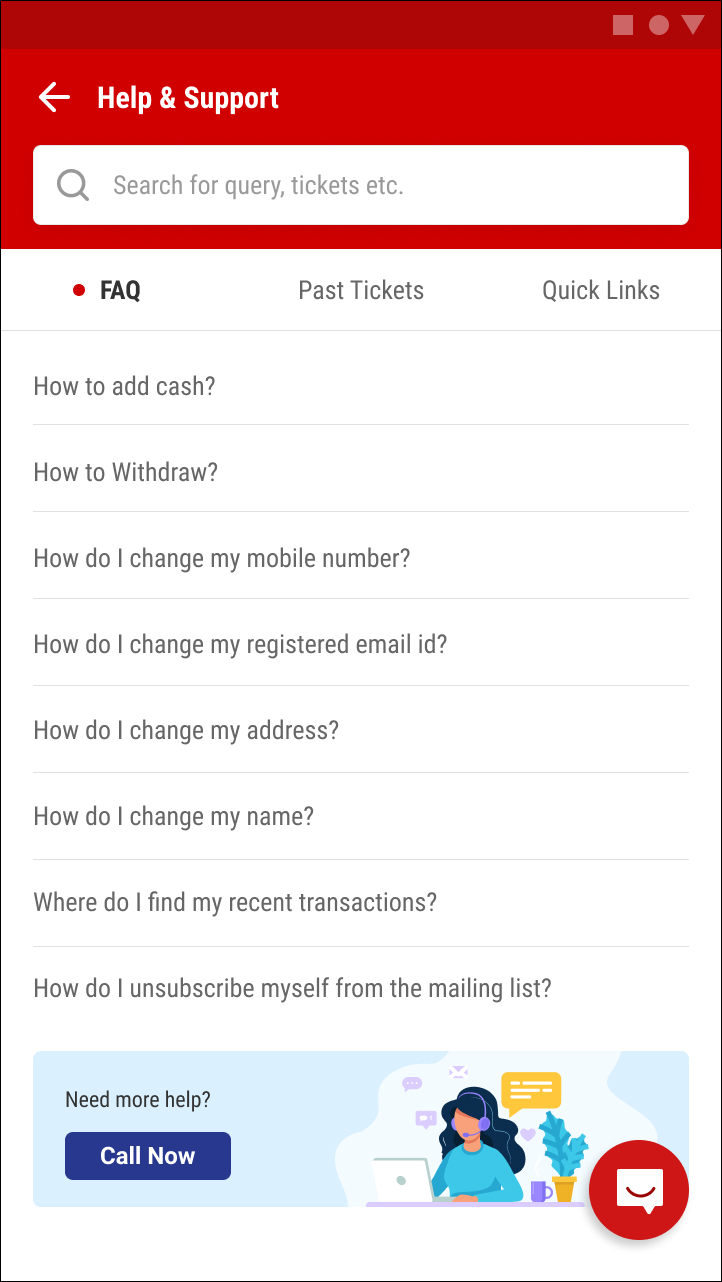
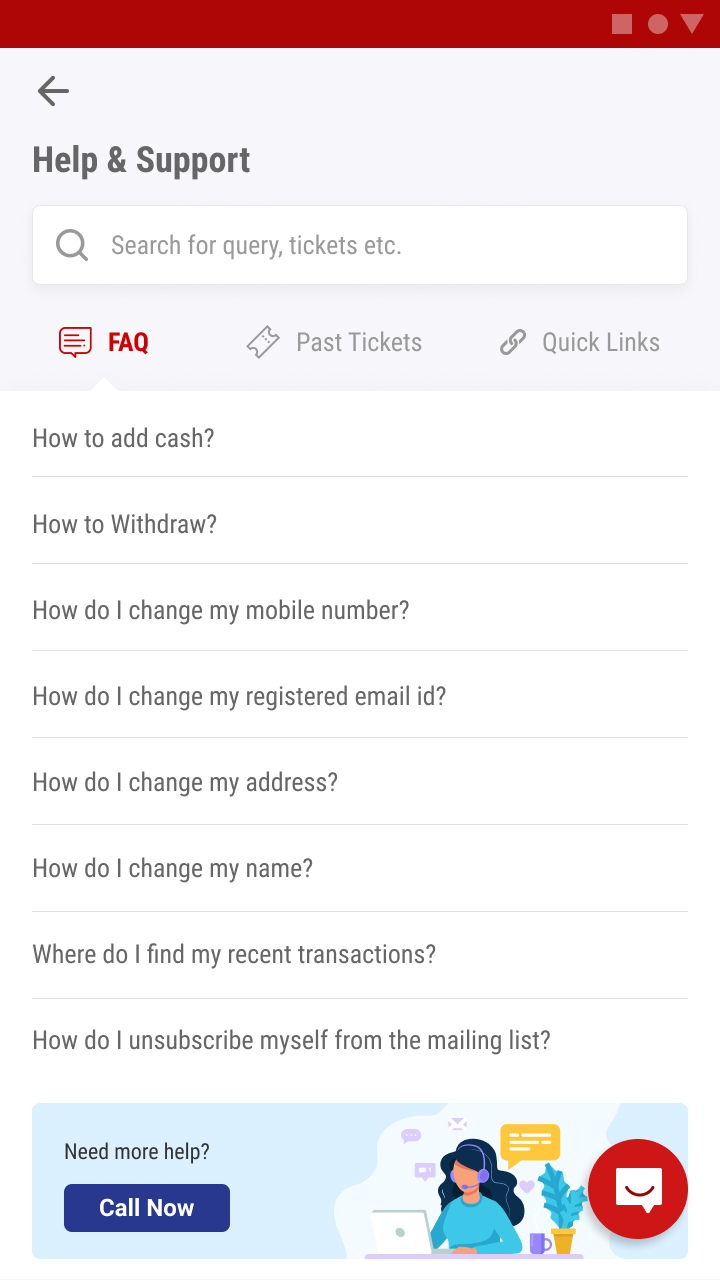
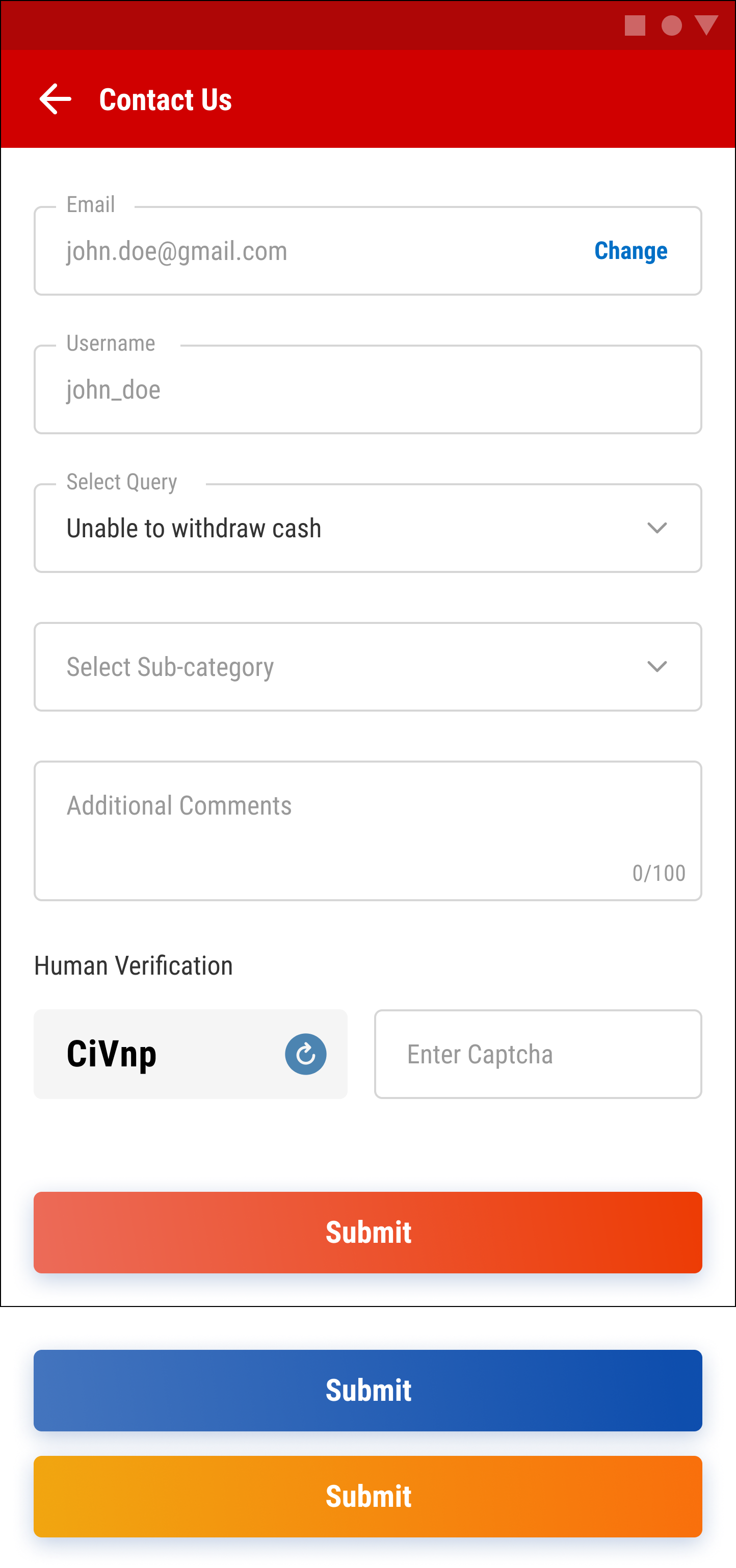
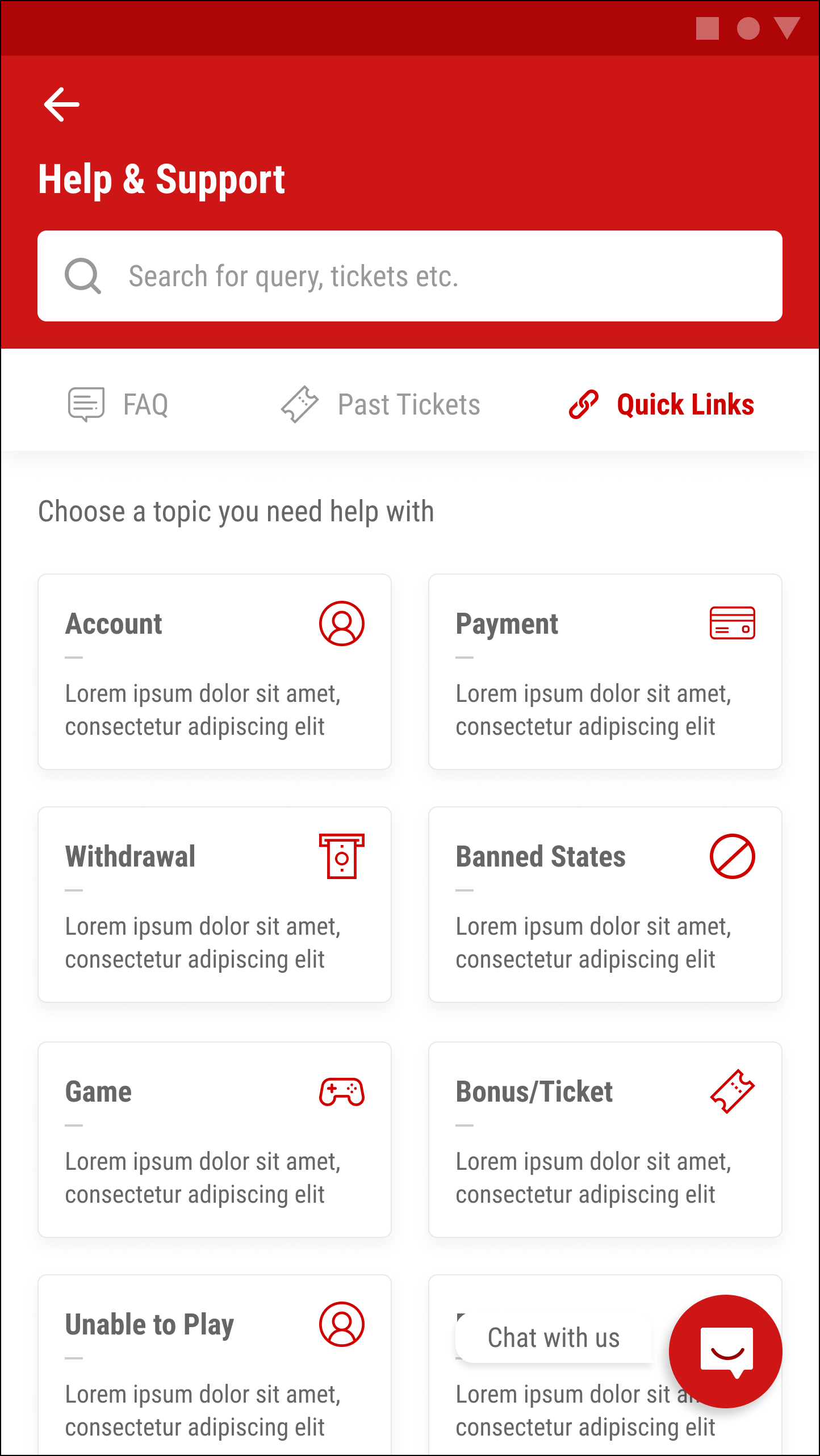
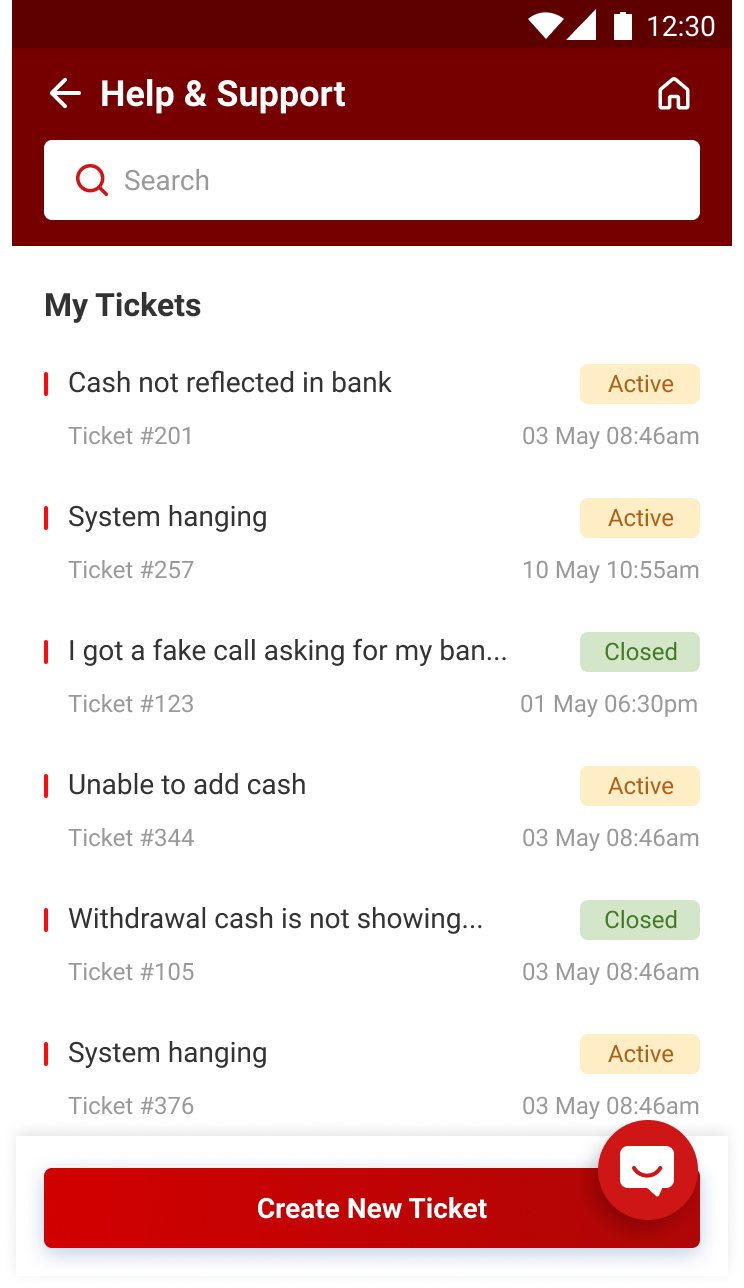
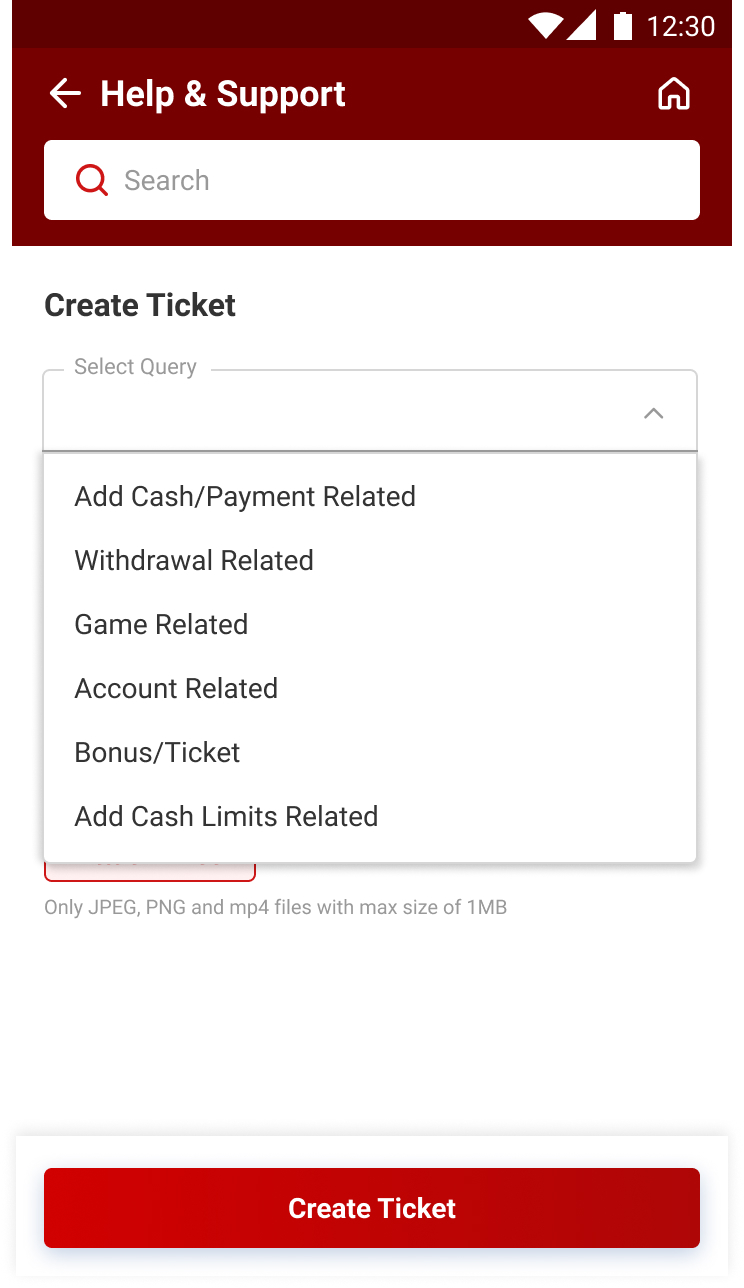
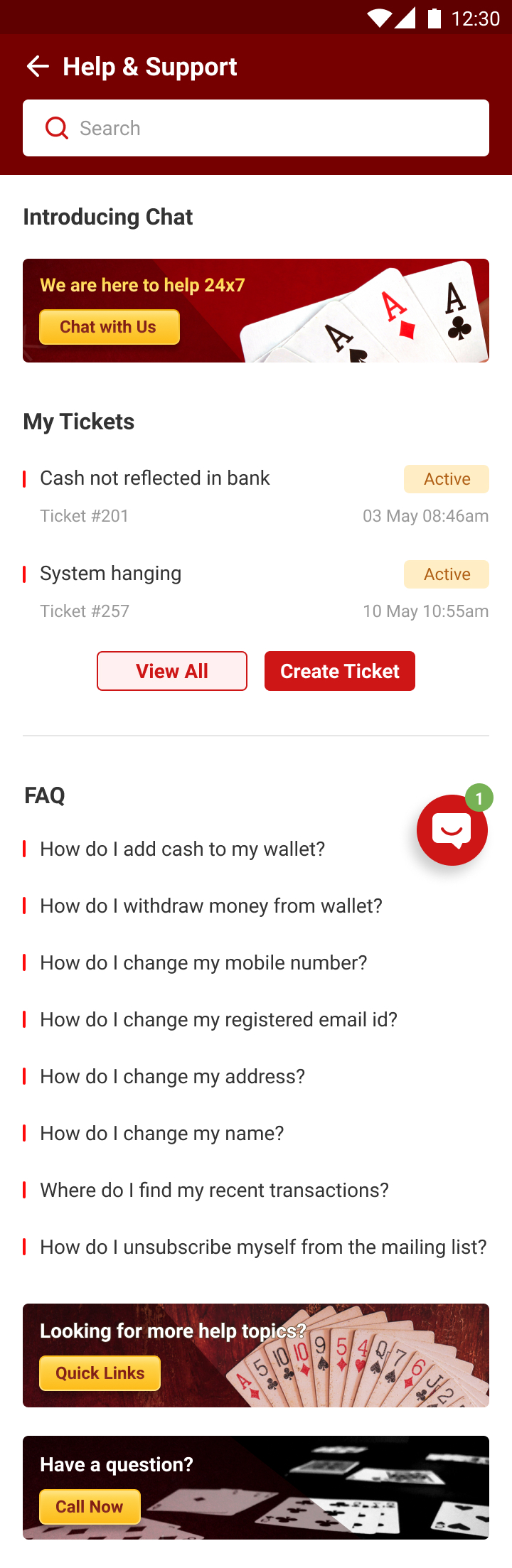
Existing pages — Help and Support touchpoints before redesign
Hypothesis
75%
Self-service target
User queries resolved without intervention of human agents — via chatbot automation.
25%
Human agent escalation
Only complex queries escalated to CS team — open tickets only for genuinely unresolved cases.
We want to eventually target ~75% user query resolution without the intervention of human agents. That means only complex ~25% queries get transferred to human agents (Games24x7 employees who are resolving queries, i.e. open tickets). Also, we want a speedy, easier and simpler UX for end users to find answers to their questions. This will impact CSAT and also long term help us reduce manpower costs.
Approach to Solution
Deploy a chatbot (virtual chat assistant) as the 1st line of defense for end users. The chatbot, via its integration capabilities, is supposed to answer the majority of end-user queries.
Only open tickets that are user queries wherein users do not get a resolution, should then form a ticket for our CS team to handle.
Powered by Haptik — Conversational AI PlatformThe Process
After seeing the current flow and pages, I mapped where help and support should be added, conducted competitor research, and iterated through design drafts before final stakeholder approval.
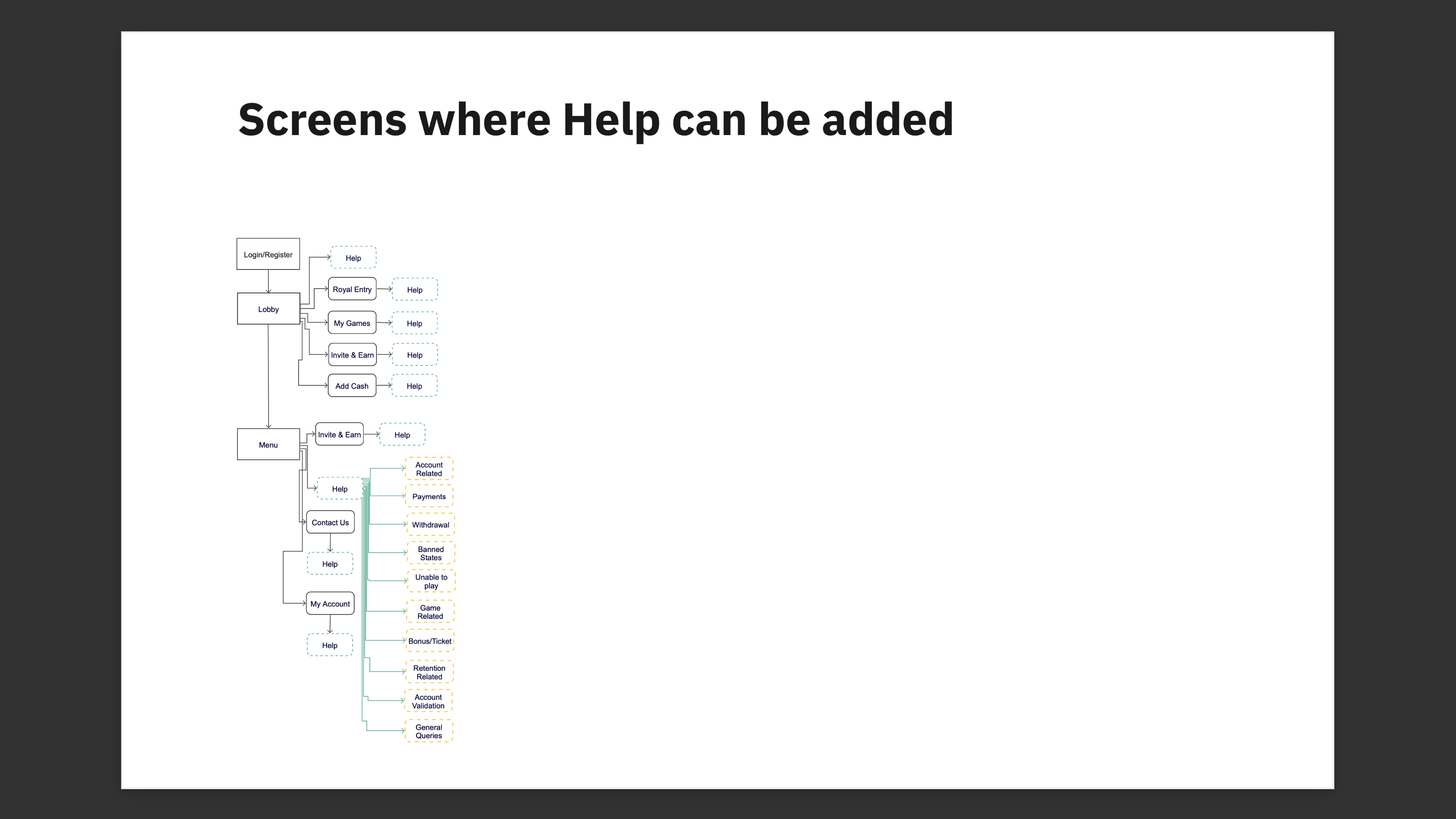
I mapped the existing app flow to identify where Help & Support touchpoints should be added — creating a proposed flow showing exactly where chatbot entry points would live.
Flow where help and support can be added
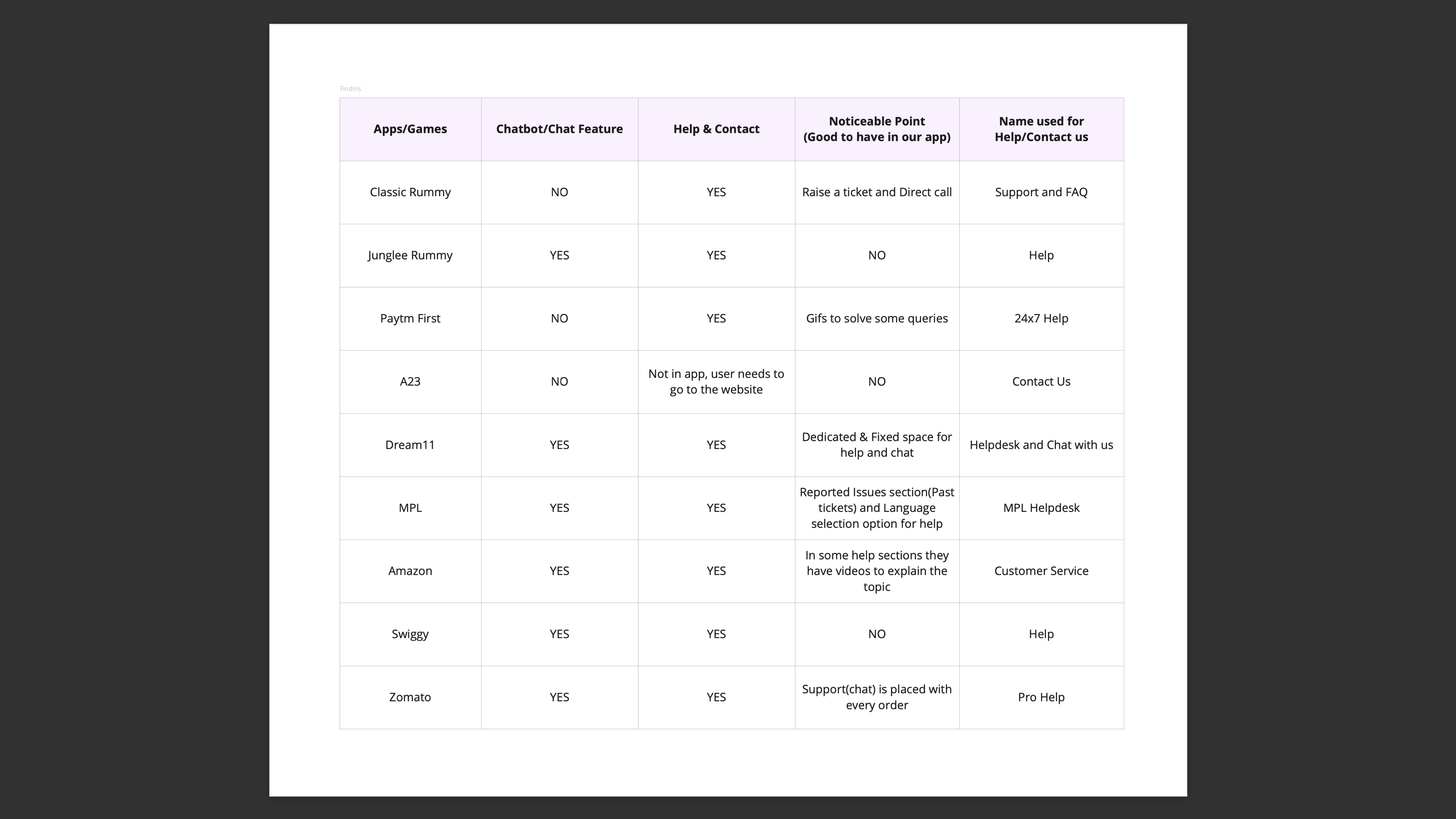
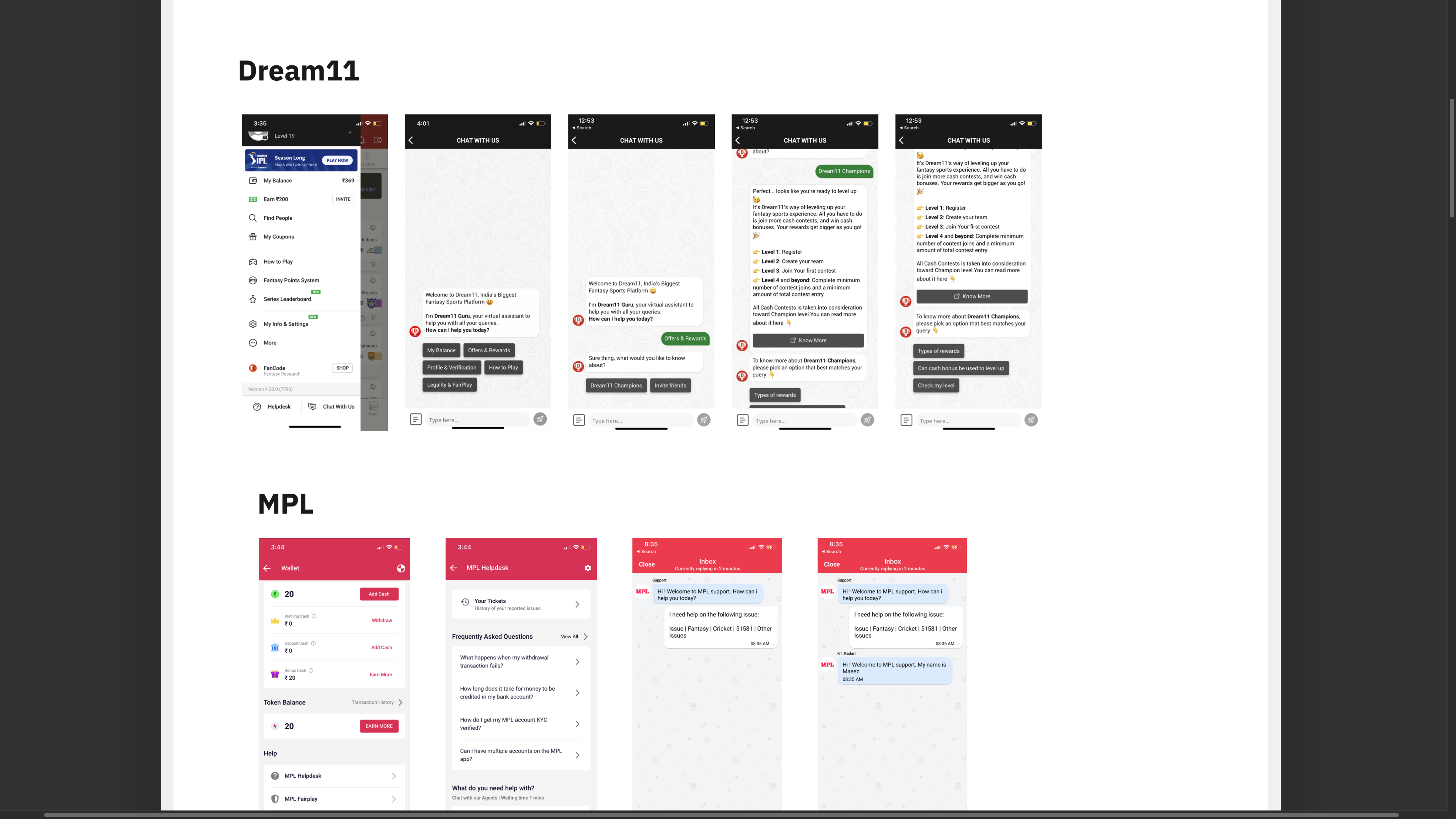
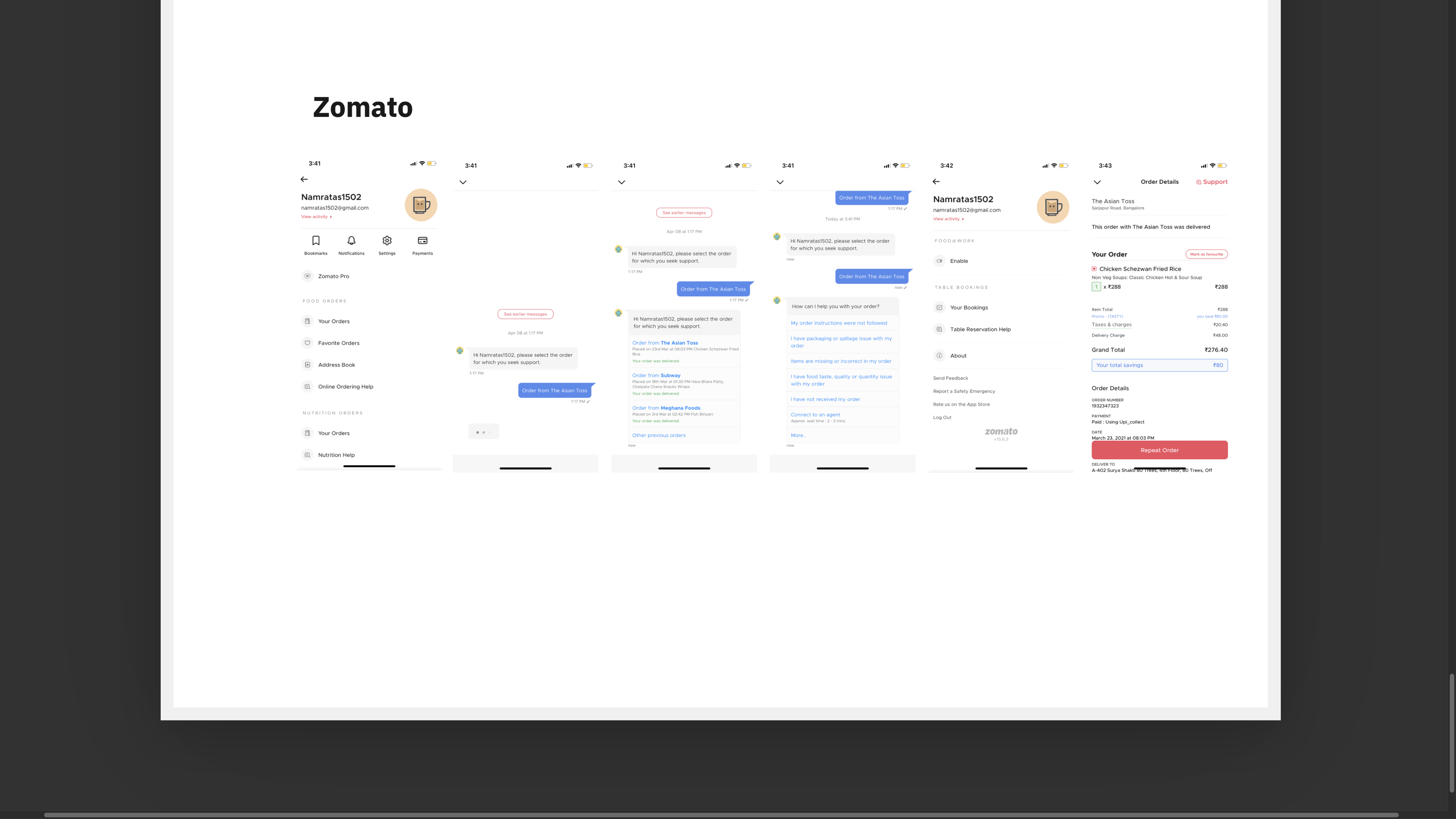
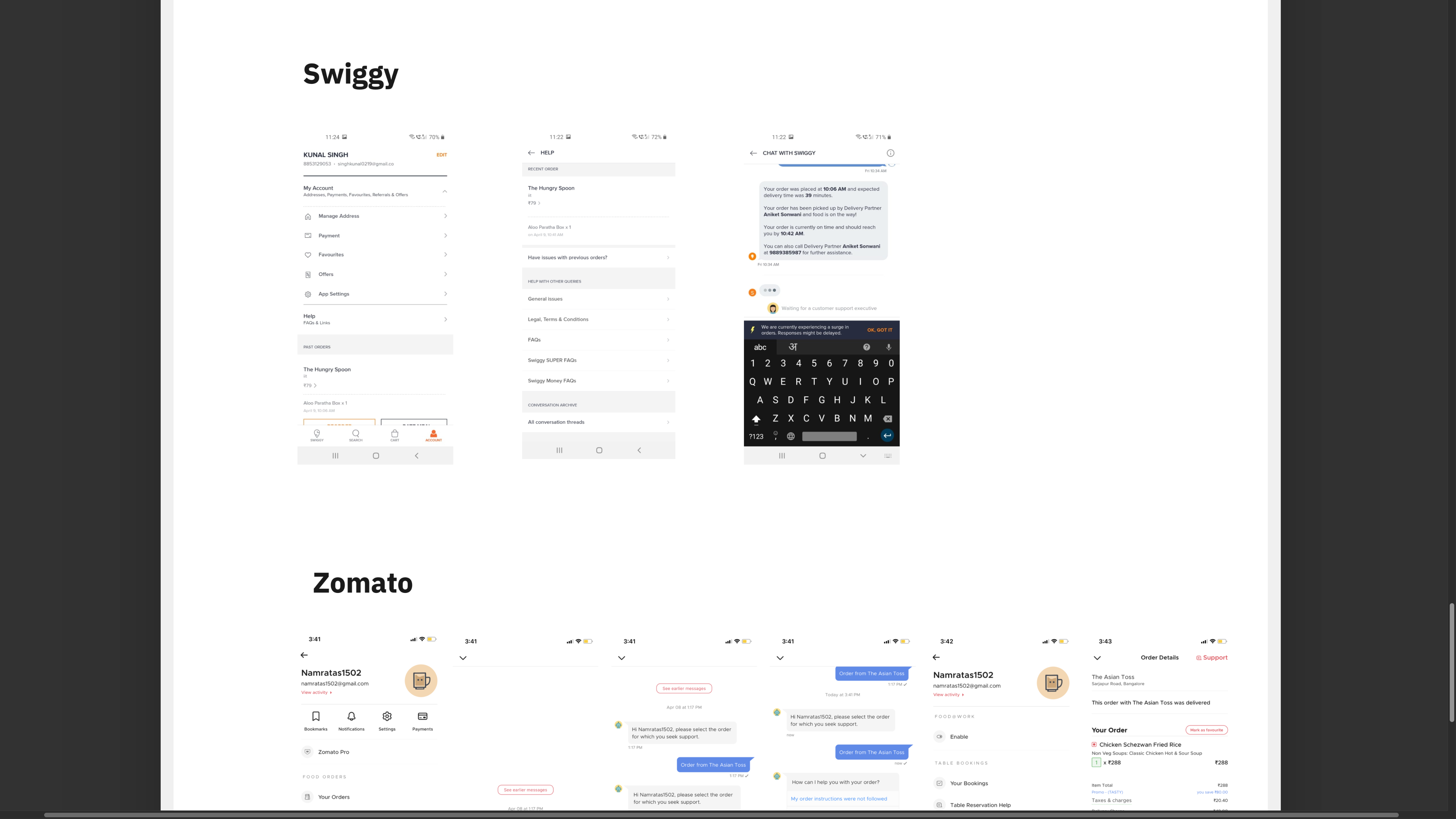
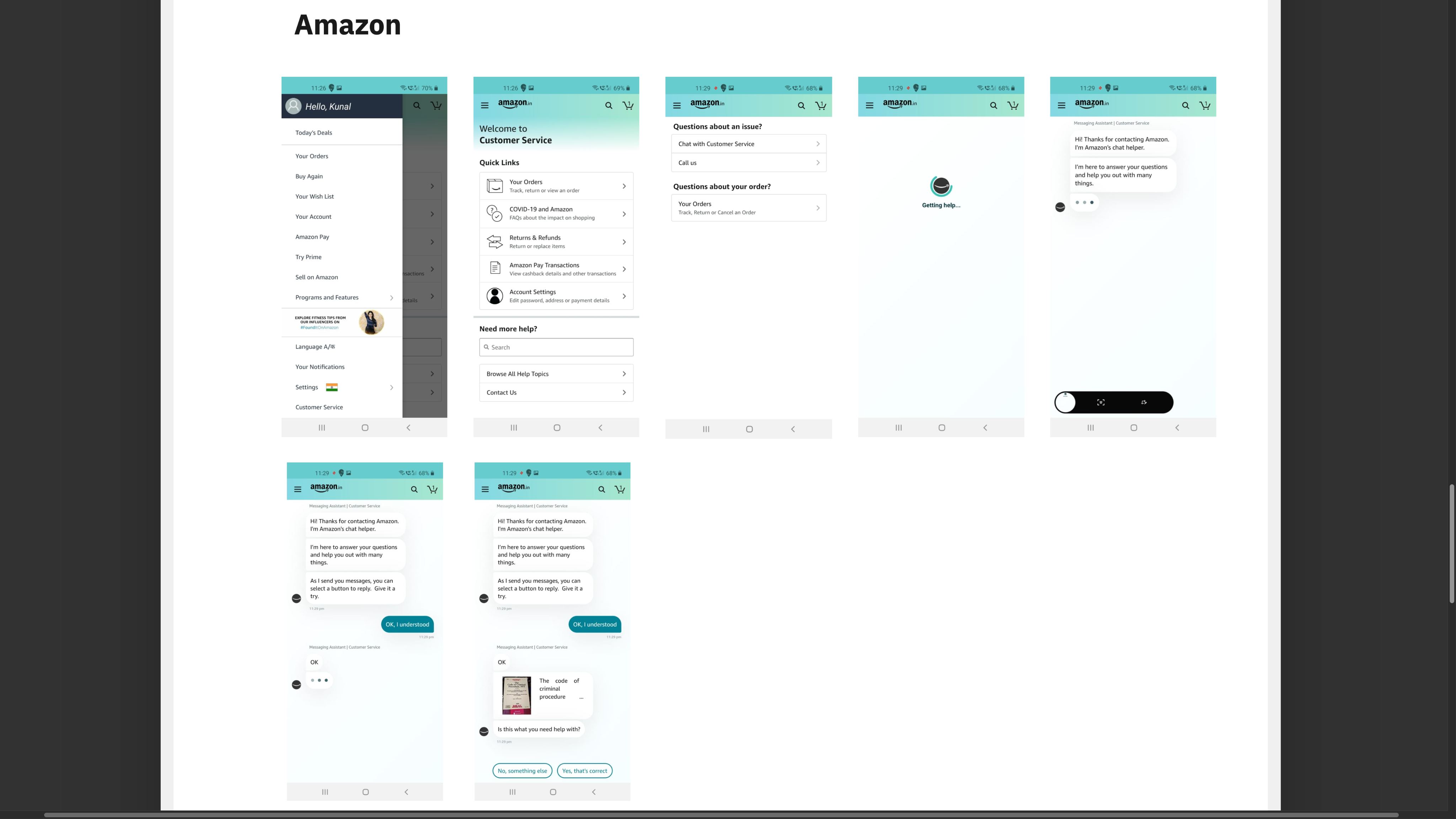
After flow creation I did market and competitor analysis to understand how other apps are solving customer support. First I checked how many apps are using chatbots — starting with well-known examples like Amazon, Zomato, and Swiggy, then looking closely at direct competitors Junglee Rummy and Dream11.
Apps using chatbot support — landscape research
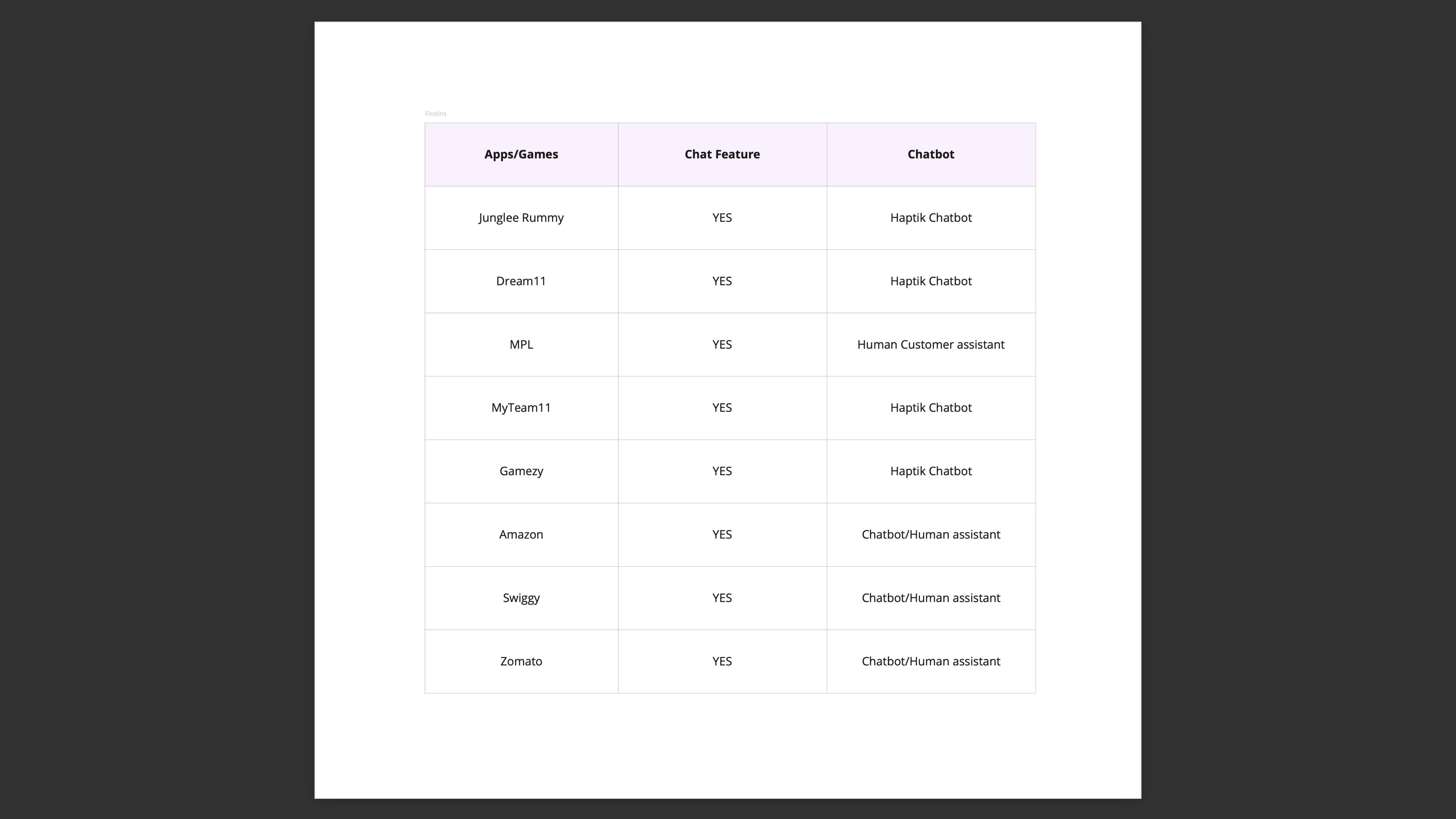
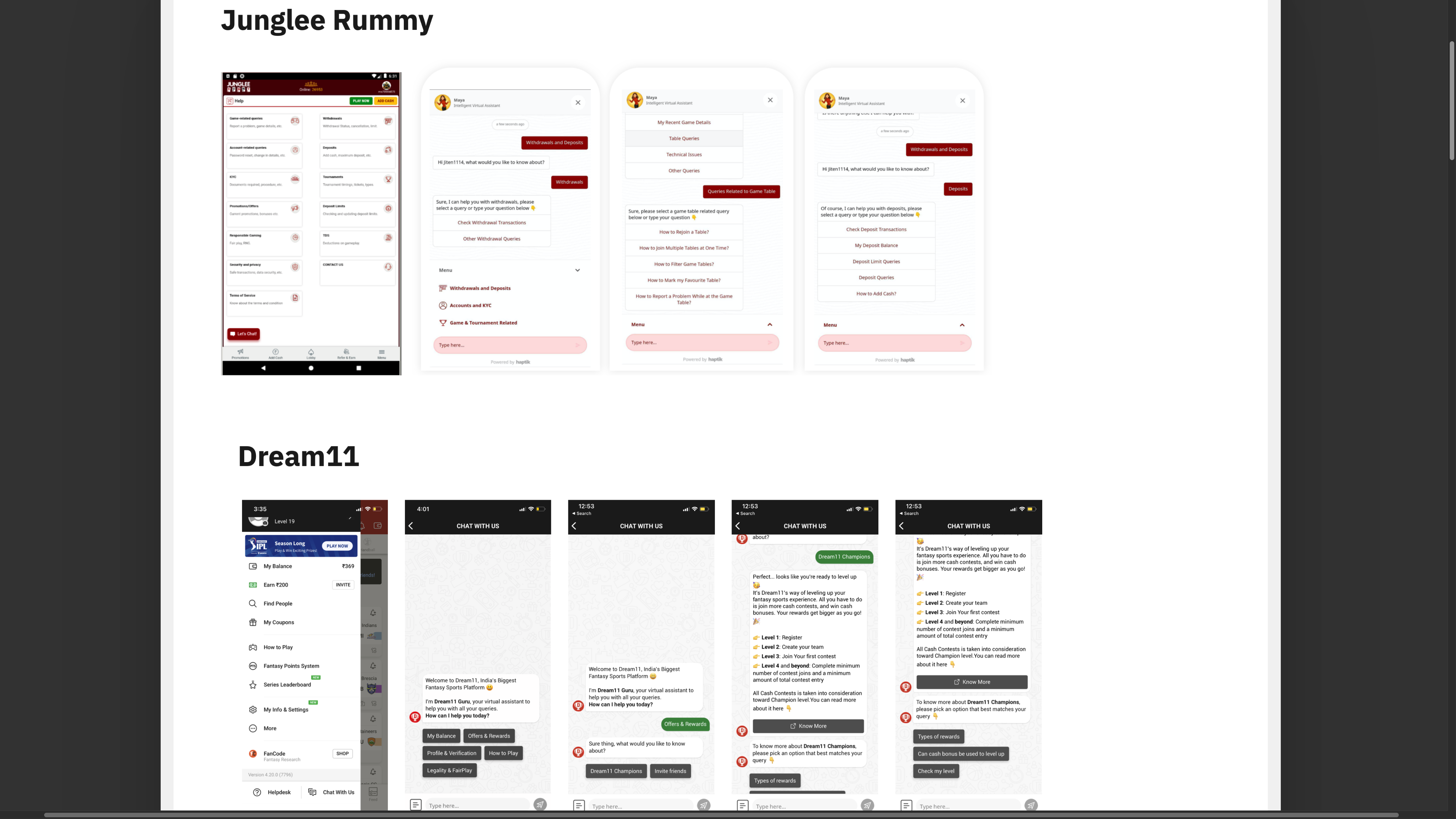
Types of chatbots used by different companies
Junglee Rummy
Dream11
Zomato
Swiggy
Amazon
Once done with all research, I started working on first design drafts covering all use cases and scenarios — five help home options, two chat initiation options, and three CTA/page style variations.
After months of research, ideation, and design iterations, the final work was shared with stakeholders and approved for handoff to the tech team.
Design Exploration
I explored multiple design directions for each key component — ensuring all use cases and edge cases were covered before converging on the final solution.
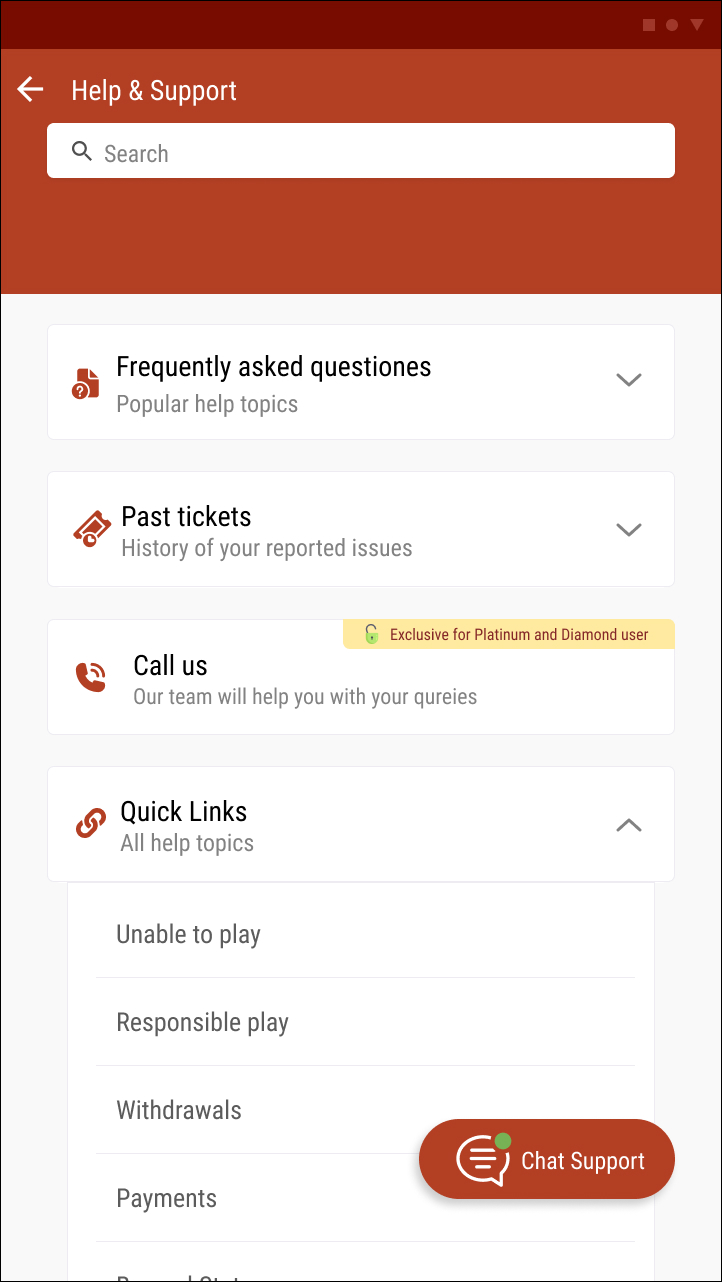
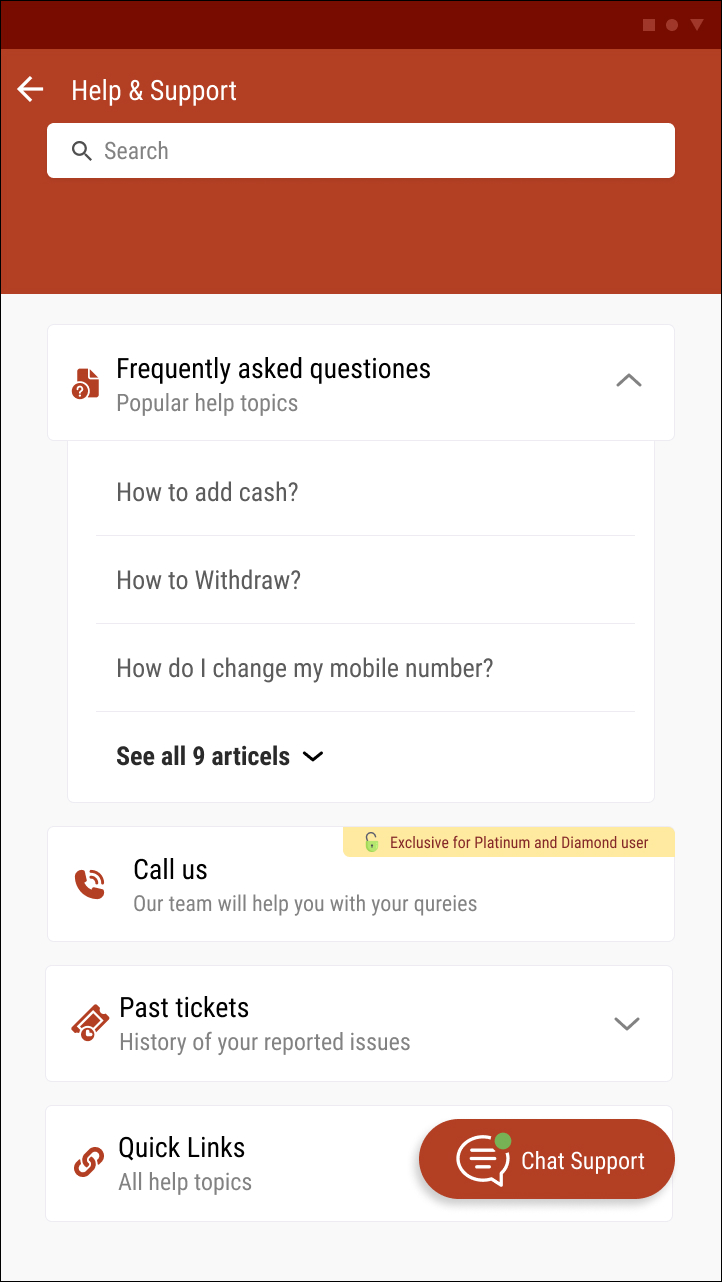
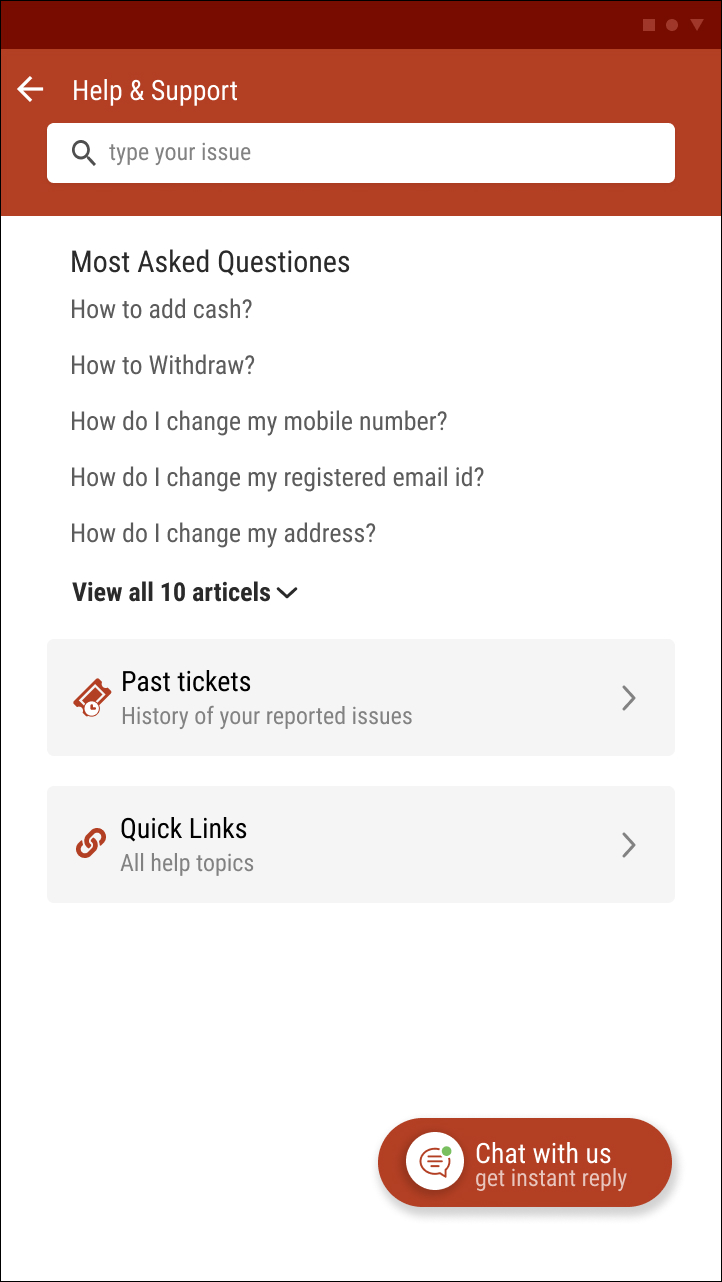
Help & Support Home Page — Design Options


Chat Initiation Point Designs


Different Styles for CTAs and Pages


Final Outcome
After months of research, ideations, and design iterations — the final work received stakeholder approval and was handed over to tech.
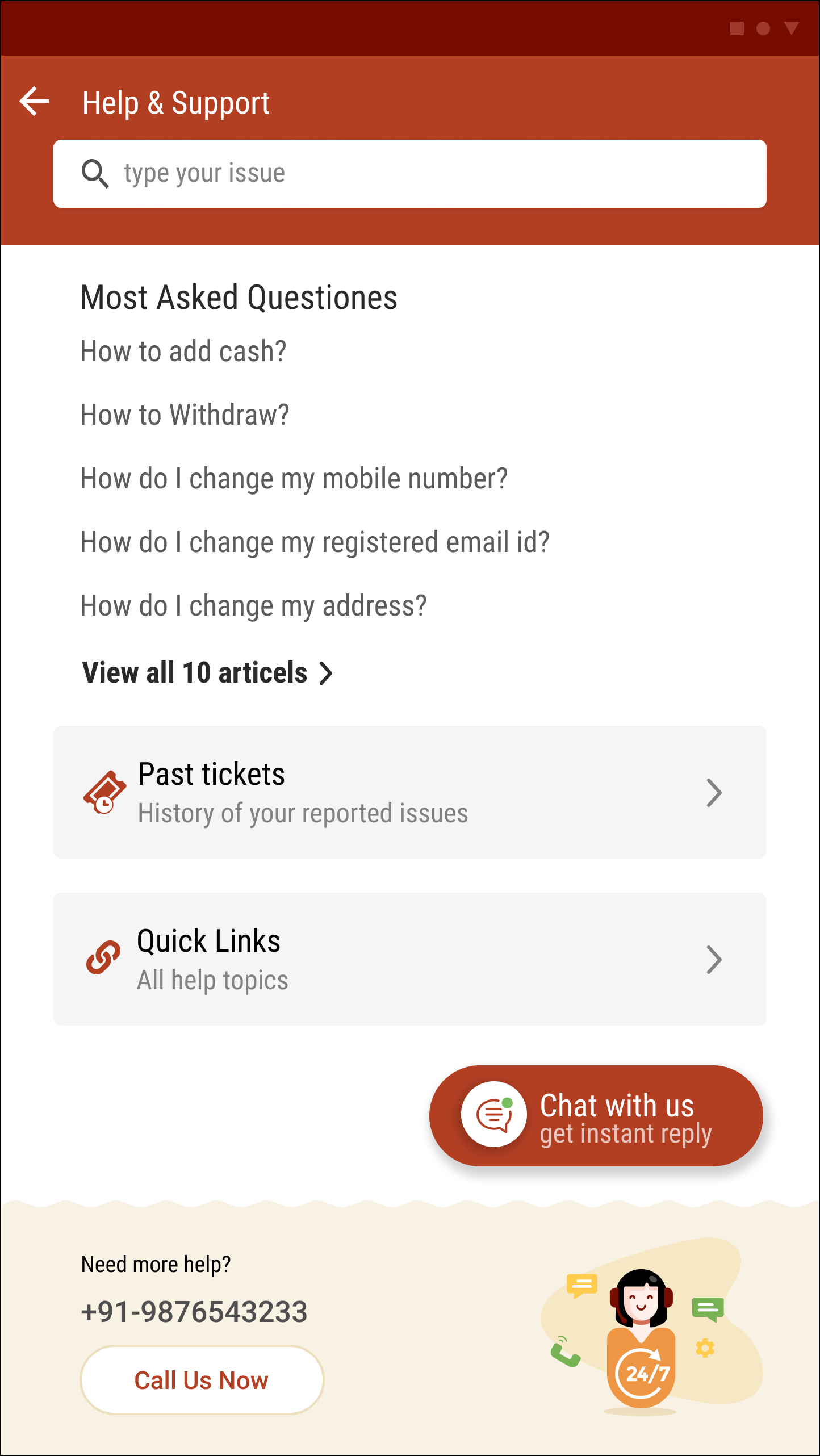
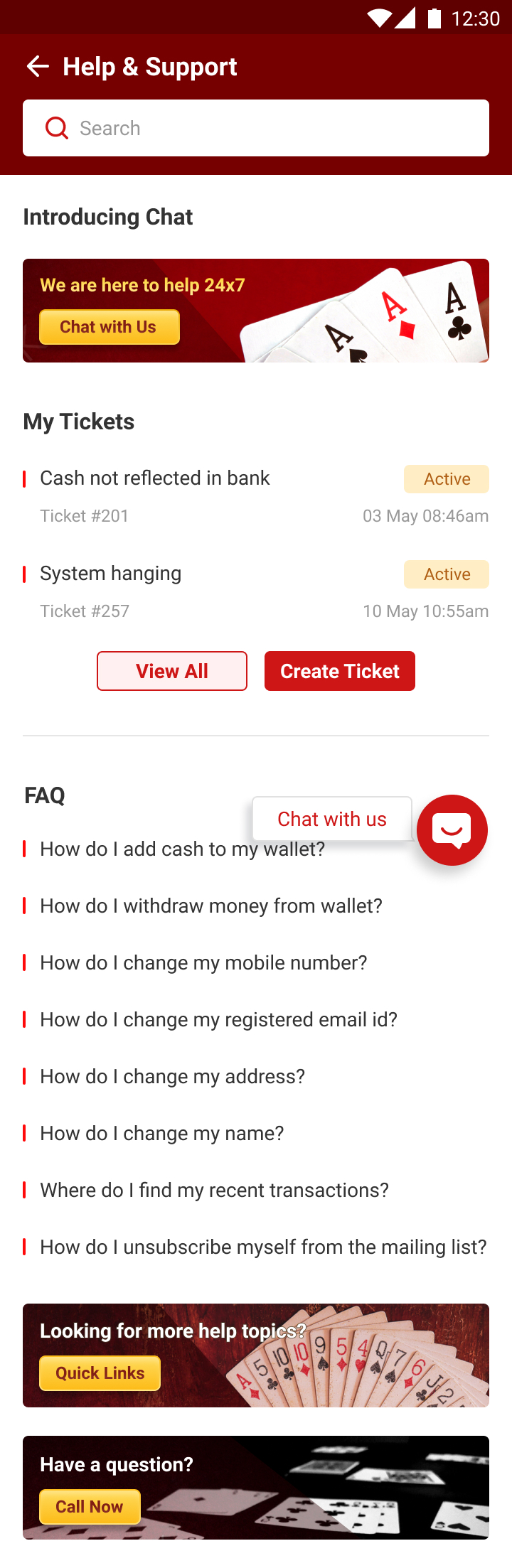
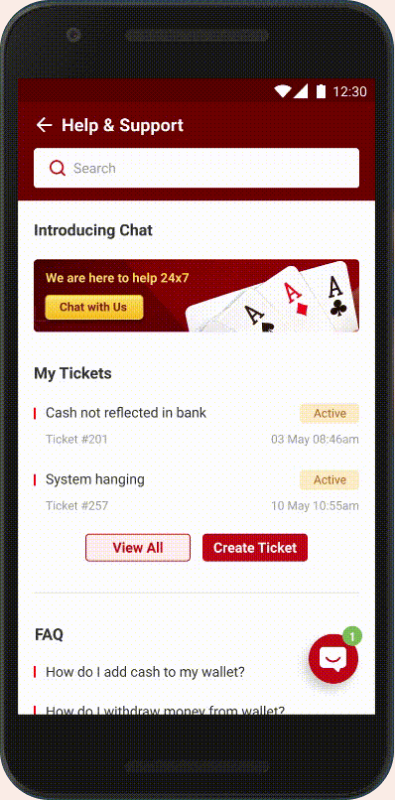
Final Help Home Page


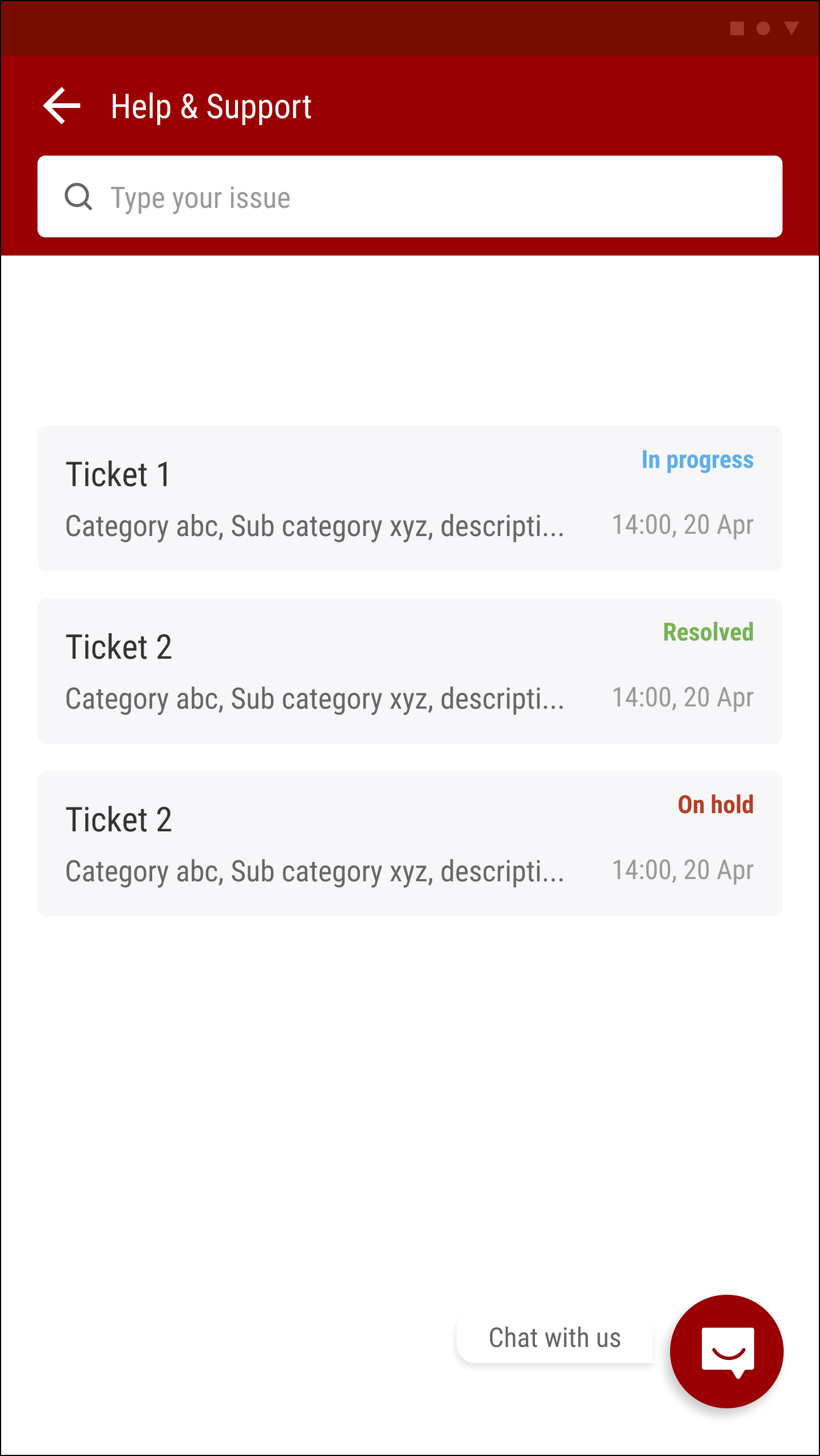
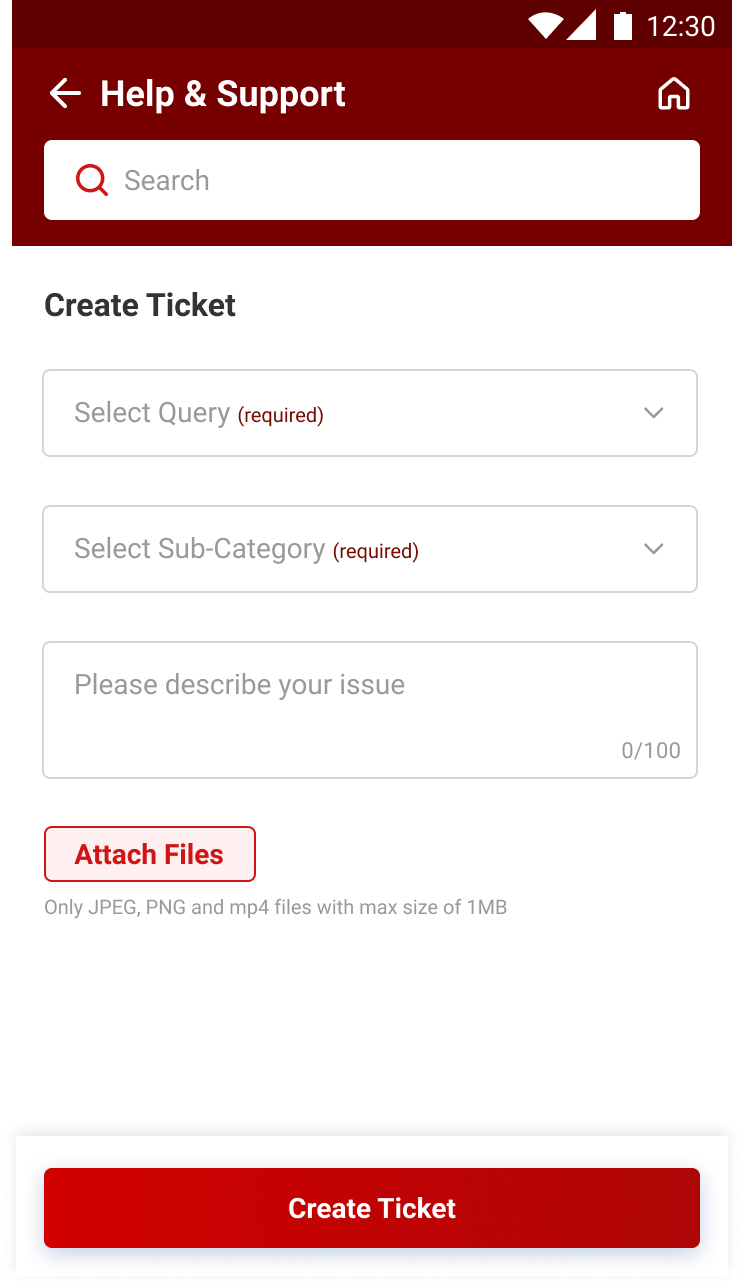
Ticket Creation


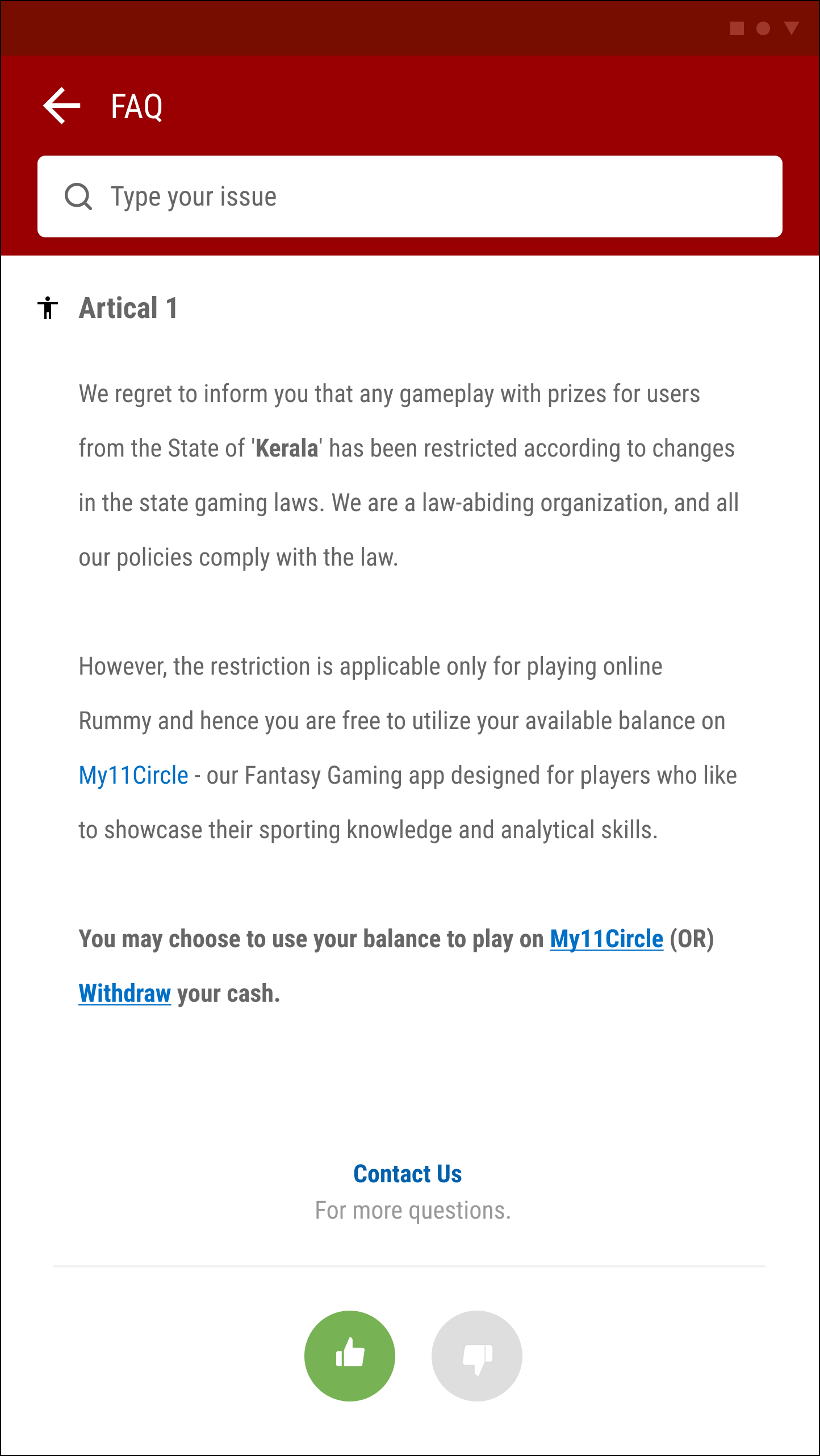
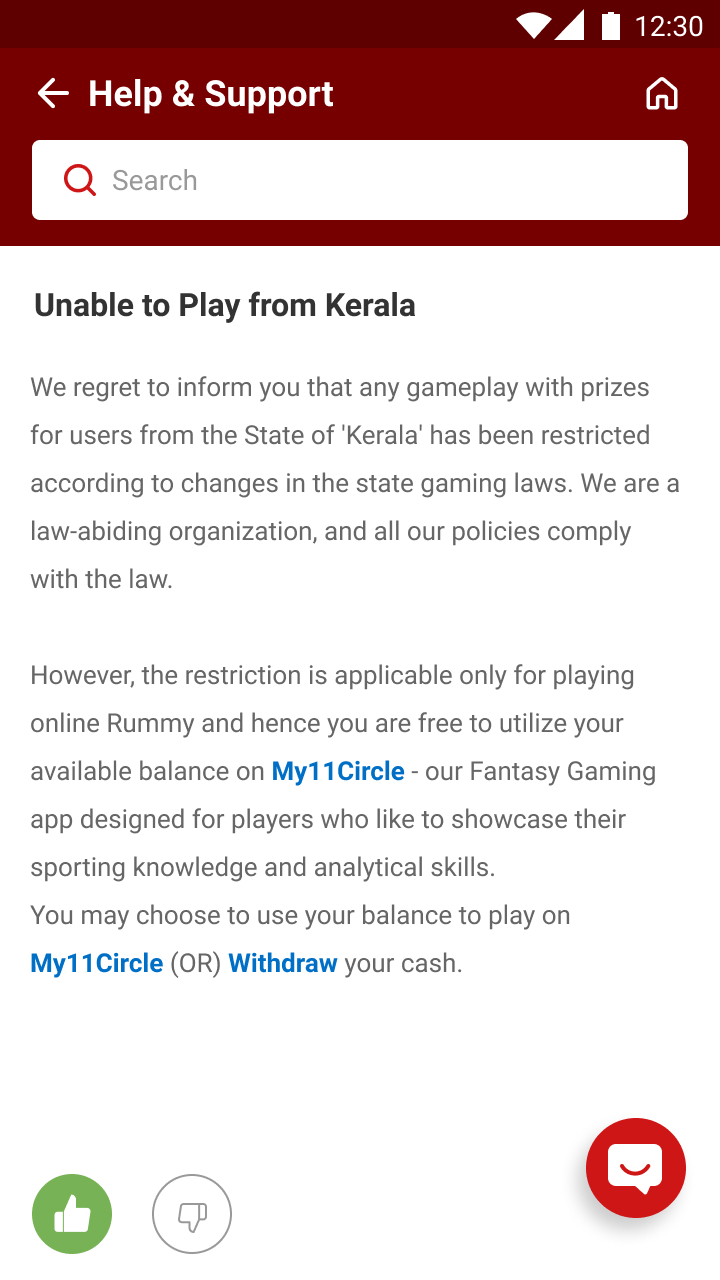
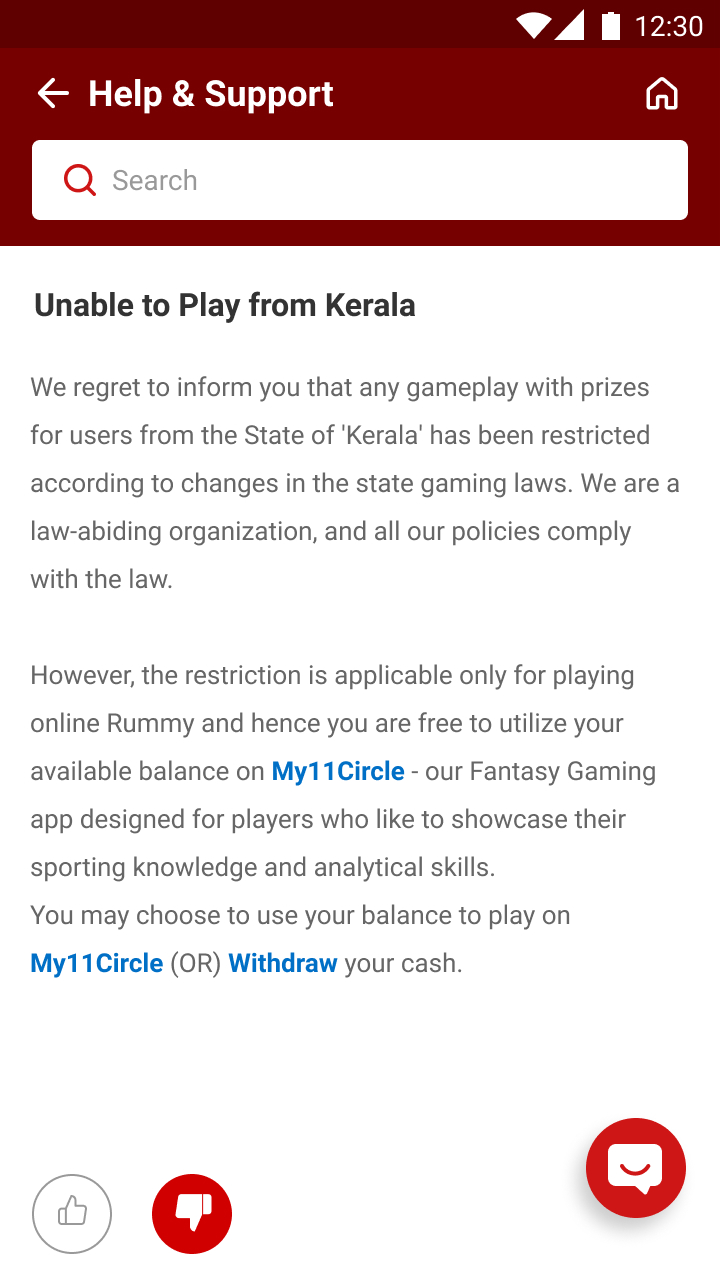
Inner Pages — Chat & Like/Dislike Actions

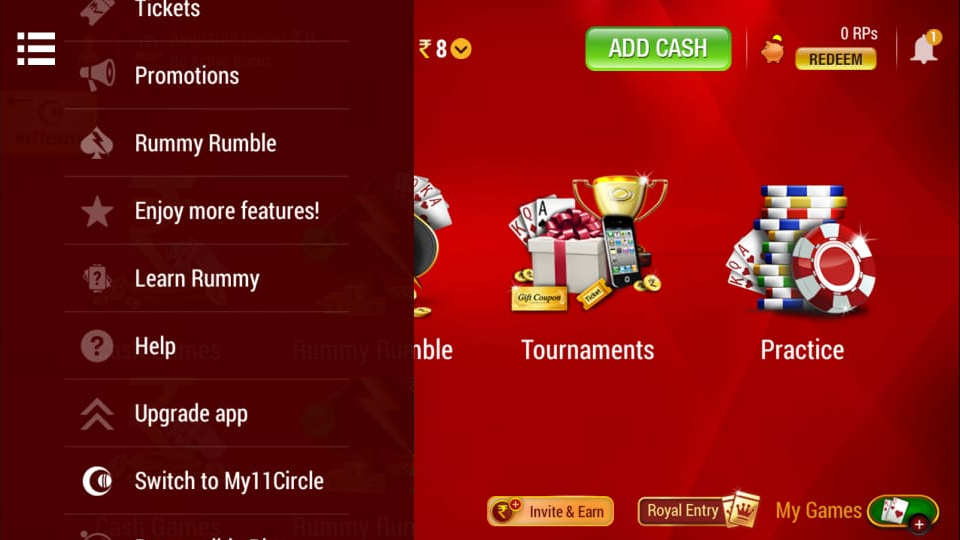
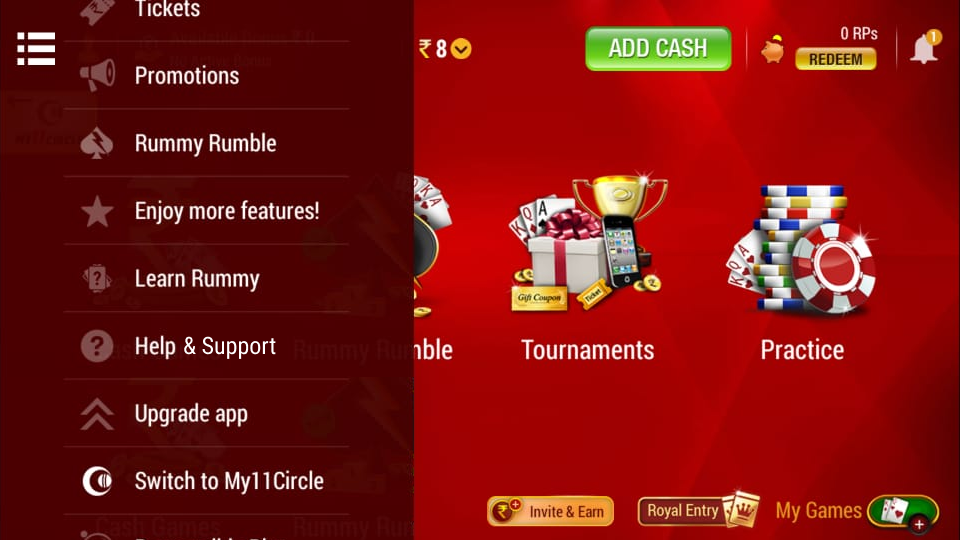
Main Menu Update — Before & After

Before

After
Lobby Screen — Before & After

Before

After
Final Flows
Four flow states showing the complete user journey through the chatbot — from the Help Home through FAQs, Ticket Creation, Quick Links, and Call/Chat escalation.


Metrics to Measure
Seven KPIs to track the impact of the chatbot system on customer support performance and satisfaction.
KPI 01
Bot automation % — number of queries a bot handled end to end daily/weekly
KPI 02
Number of queries transferred to a human agent daily/weekly
KPI 03
Average resolution time — were we able to bring down resolution time?
KPI 04
Average response time — having a bot would have sped up response times
KPI 05
CSAT — how many customers are unhappy with the query resolution?
KPI 06
Bot accuracy % — # of conversations without bot breaks / total conversations
KPI 07
Average Bot conversations count per player in a given time period